21 Aug 2026
Shifting Dealer Interactions and Their Effects on Bet Timing in Streamed Wheel Sessions

Streamed wheel sessions have evolved considerably as live dealer platforms integrate new communication protocols and timing tools that alter how dealers manage player interactions and betting windows. Observers note that dealers now adjust their pacing based on real-time feedback from chat systems and automated prompts which directly influence the duration between spins and the placement of bets. Research from the International Center for Gaming Regulation at UNLV indicates that these adjustments became more pronounced after platform updates rolled out in early 2025 with measurable impacts on average bet placement intervals.
Dealers in these environments often use brief verbal cues or gestures to signal when betting opens and closes yet the frequency and style of these cues have shifted in response to software that tracks player activity levels. When a dealer shortens the verbal announcement phase players tend to place bets more quickly because the visual wheel spin follows almost immediately after the cue. Data collected across multiple European streaming sites shows that sessions with reduced dealer commentary averaged 12 seconds shorter per betting round compared to those maintaining longer interaction sequences.
Changes in Dealer Communication Patterns
Platform operators introduced standardized interaction scripts in 2024 that dealers follow during high-volume periods and these scripts have continued to influence bet timing into 2026. Dealers trained on the newer protocols spend less time on personalized greetings and more on concise instructions which compresses the window available for players to finalize their selections. Figures from the Nevada Gaming Control Board released in August 2026 reveal that live wheel streams operating under updated interaction guidelines experienced a 9 percent reduction in average bet cycle time over the preceding twelve months.
Some dealers still incorporate light conversation during slower sessions and this variation creates measurable differences in how quickly participants respond. Sessions featuring occasional dealer anecdotes between spins demonstrate longer intervals between the close of one betting period and the start of the next because players pause to acknowledge the exchange before committing their stakes. Those who have analyzed stream logs find that such extended interactions correlate with a slight increase in late bet attempts which platforms then flag through automated monitoring systems.
Impact of Technology on Timing Dynamics
Integrated timing overlays now appear on many streamed interfaces and these visual elements interact with dealer behavior to guide player decisions. When the overlay counts down in sync with dealer announcements bet placement accelerates because participants receive simultaneous auditory and visual prompts. Studies conducted by the Canadian Institute for Gaming Research documented that synchronized prompts reduced the standard deviation of bet timing by 18 percent across sampled sessions suggesting more uniform player responses under these conditions.
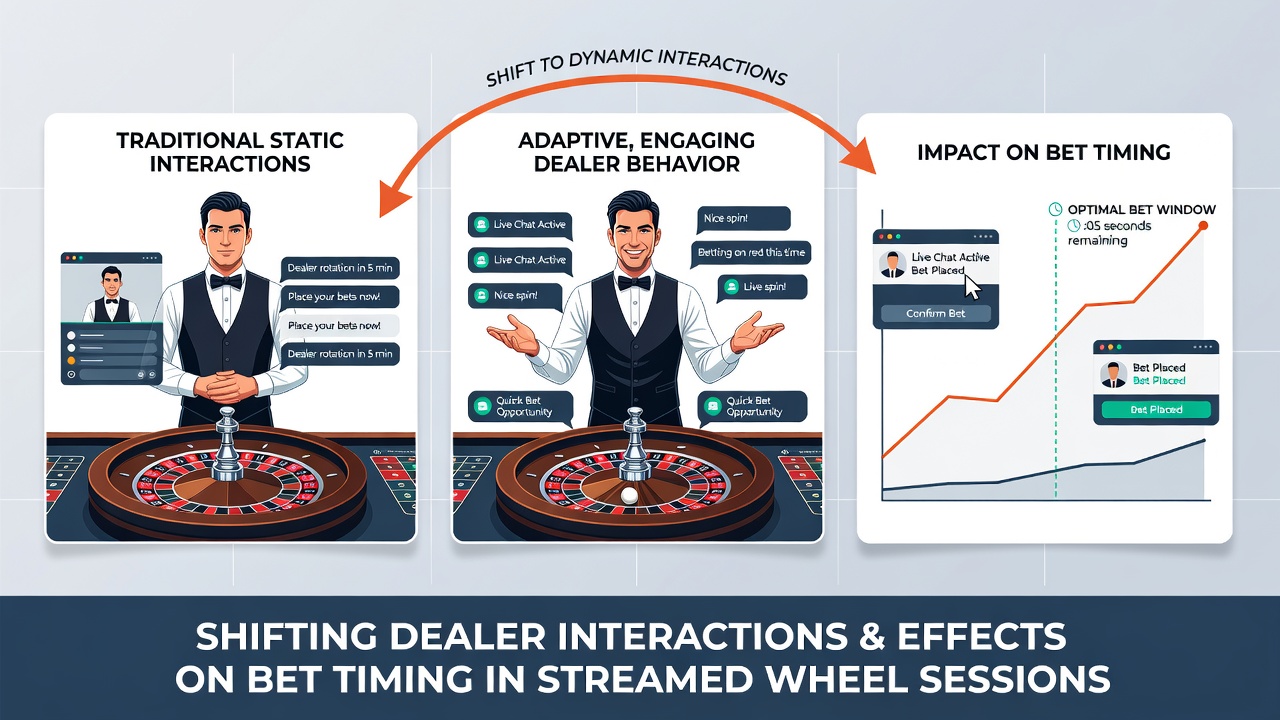
Dealers who deviate from the expected script by adding extra pauses or clarifications can disrupt the synchronization and this leads to scattered bet submissions near the deadline. Platform analytics teams track these deviations and adjust dealer schedules accordingly so that high-volume periods receive dealers who maintain tighter interaction rhythms. Evidence from operator reports compiled in mid-2026 shows that such scheduling changes produced more consistent round lengths across different time zones.
Player Response Patterns Across Regions
Regional differences emerge when dealers adapt their style to audience preferences and these adaptations affect how quickly bets arrive in the system. North American streams often feature dealers who emphasize clear countdowns while Asian-market sessions incorporate more frequent short confirmations that keep players engaged without extending the betting window. Aggregated data indicates that these regional approaches produce distinct clustering of bet placements with North American sessions showing earlier submissions on average.
Automated systems now flag when dealer interactions fall outside established parameters and this triggers immediate review of the session recording. Review processes have become routine since regulatory updates in several jurisdictions required detailed logging of interaction timing alongside bet data. Observers note that compliance teams use these logs to verify that dealer behavior aligns with platform standards for fair play and transparent timing.
Conclusion
Dealer interactions in streamed wheel sessions continue to evolve alongside technological refinements that shape betting windows and player responses. Data from multiple regulatory and research sources demonstrates consistent patterns where changes in communication length and synchronization alter the pace at which bets are placed. As platforms refine these elements further the relationship between dealer conduct and bet timing remains a central focus for operators seeking to maintain smooth session flow.