26 Aug 2026
Promotional Structures Guiding Player Shifts Between American Format Payouts and French Wheel Mechanics in App-Based Environments
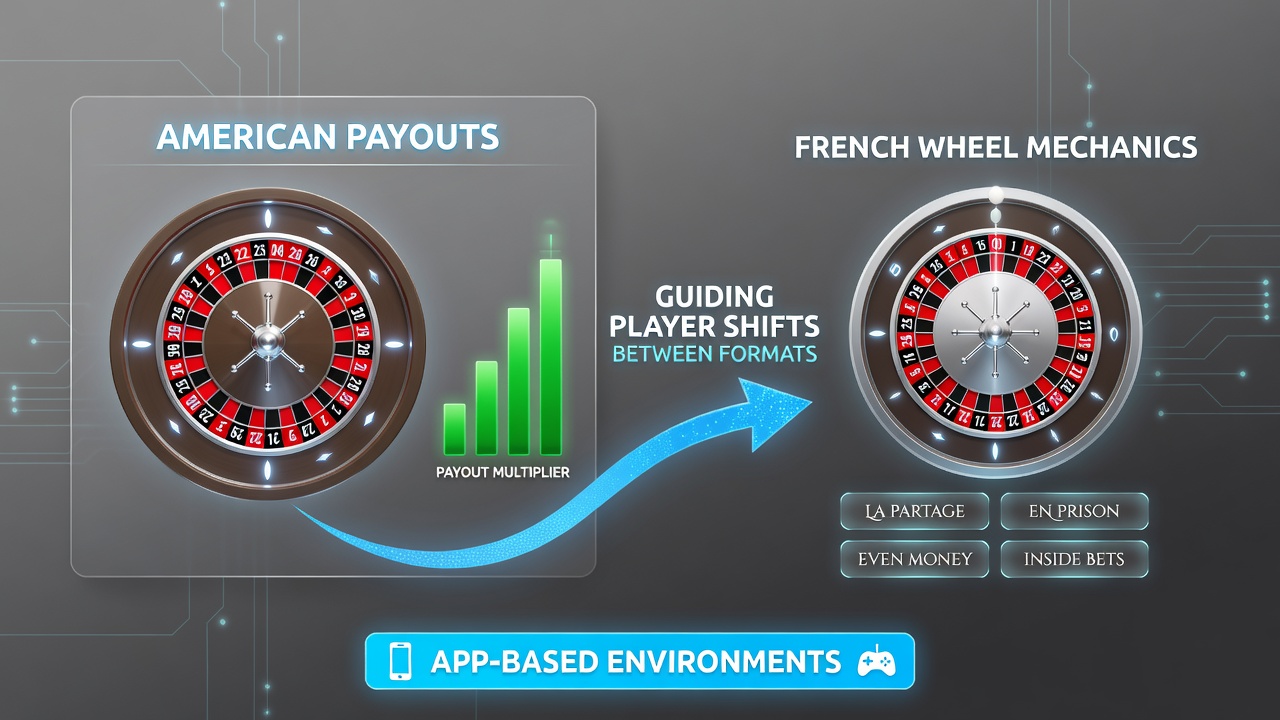
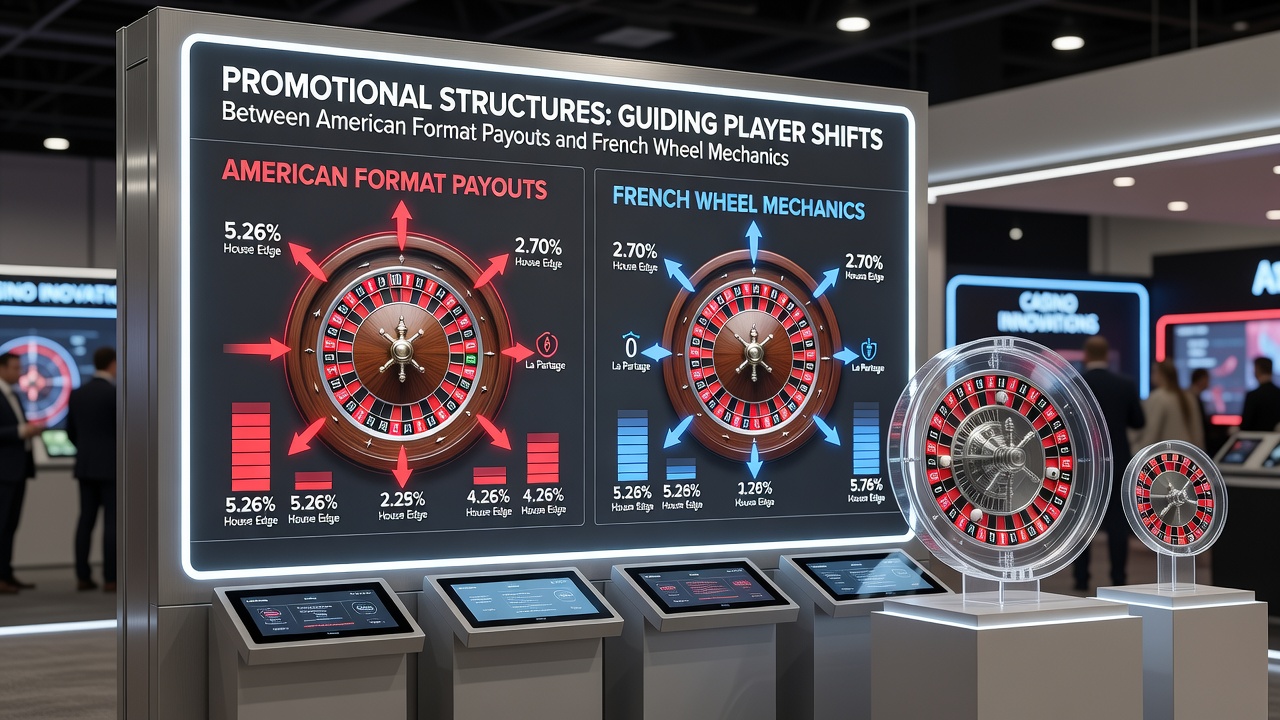
App-based platforms integrate structured incentives that direct users from American roulette formats toward French wheel mechanics and back again, relying on payout differentials and rule variations to shape engagement patterns. American variants operate with a double-zero wheel that produces a house edge of 5.26 percent, whereas French configurations use a single zero plus la partage and en prison rules that reduce the house edge to 1.35 percent on even-money bets. Developers embed these mechanical distinctions into mobile interfaces, then layer time-limited offers that reward transitions between the two formats.
Core Mechanical Differences Driving Incentive Design
American payouts follow standard even-money returns at 1:1 alongside 35:1 on straight-up bets, while French wheels apply the la partage rule that returns half the stake on even-money losses when zero appears. App algorithms track session data to identify when players accumulate losses on the higher-edge American format, then surface prompts offering bonus credits valid only on French wheel tables. These triggers activate after predetermined thresholds, such as twenty spins without a win or a net loss exceeding a set percentage of the starting balance.
Research from the University of Nevada, Las Vegas shows that players who receive targeted transition bonuses switch formats 47 percent more often than those who do not. The same study notes that French wheel sessions following an American format loss exhibit longer average duration because the lower house edge and rule modifications create an immediate perception of improved odds.
Incentive Structures Embedded in Mobile Applications
Push notifications and in-app banners deliver offers that scale with player history. A user who logs repeated American roulette sessions may receive a 50 percent match bonus capped at 100 credits when they open a French wheel table for the first time that day. Conversely, high-volume French wheel users encounter reload bonuses that activate only after they place at least five American format bets, encouraging periodic shifts back to teh higher-edge variant. Loyalty tiers accumulate points at different rates depending on the wheel selected, with French mechanics often awarding bonus points at 1.5 times the American rate to sustain longer engagement.
August 2026 updates across several major platforms introduced cross-format streak multipliers. Players who alternate between American and French wheels within a single hour receive an escalating multiplier on winnings, starting at 1.1x and rising to 1.5x after three switches. Backend telemetry indicates these multipliers increase total spins per session by an average of 28 percent.
Behavioral Data and Regional Regulatory Context
Figures released by the Pennsylvania Gaming Control Board document that mobile roulette applications account for 34 percent of all online table game handle in the state during the first half of 2026. Within those figures, promotional redemptions tied to format switching represent 19 percent of total bonus volume. Observers note that jurisdictions with mandatory responsible gaming disclosures require apps to display house edge information before any bonus activation, which influences how quickly users accept transition offers.
The Alcohol and Gaming Commission of Ontario reports similar patterns in Canadian markets, where French wheel promotions appear more frequently during evening peak hours. Data indicates users aged 25 to 34 accept format-switch bonuses at nearly double the rate of users over 45, correlating with higher session frequency on mobile devices.
Technical Implementation and Tracking Mechanisms
Apps employ server-side player segmentation that assigns each account to cohorts based on historical format preference. When a cohort shows declining activity on one wheel type, the system releases a personalized offer that appears as a floating card within the lobby. The card displays exact credit amounts, expiration timers, and a direct link to the alternate wheel. Backend systems record whether the user completes teh required action within the window, then adjust future offer values accordingly to maintain engagement velocity.
Industry reports compiled by the European Gaming and Betting Association track an increase in multi-variant loyalty programs across European app operators. These programs assign distinct point multipliers to American and French wheels, creating a numerical incentive to cycle between them rather than remain on a single format for extended periods.
Conclusion
Promotional architectures in app environments systematically exploit payout and rule differences between American and French roulette to guide player movement. Structured bonuses, streak multipliers, and loyalty adjustments function together to increase total handle while distributing activity across both wheel types. Regulatory filings from multiple jurisdictions confirm these mechanisms operate within disclosed parameters, and usage data continues to shape how operators refine offer timing and value through 2026 and beyond.